Five Essential Exercises for Beginner Lifters
Starting a strength training routine involves learning a set of foundational movements that can support long-term development. Many programs emphasize compound exercises — those that engage multiple joints and muscle groups simultaneously — as a practical starting point. These movements not only help develop coordination and stability but also allow the body to adapt to progressively increasing demands over time. Understanding the mechanics of each exercise and practicing consistent technique forms the basis for safe and effective training.
The following five exercises are commonly included in introductory strength programs because they address fundamental patterns of human movement: squatting, hinging, pushing vertically and horizontally, and pulling. Each pattern has a distinct role in building total-body strength and requires attention to body positioning, control, and breathing. When performed with appropriate loads and proper form, these exercises can contribute to improved movement quality and physical resilience.
This article provides an overview of each movement, describing the key points of technique and considerations for those new to resistance training. The goal is to present the exercises as part of a broader framework for learning, rather than as a one-size-fits-all prescription. Individual factors such as mobility, experience, and goals will influence how these movements are best incorporated into a training plan.
The Squat
The squat is a fundamental lower-body movement that involves bending the hips and knees while keeping the torso upright. It primarily targets the quadriceps, hamstrings, glutes, and core muscles. For beginners, starting with a bodyweight squat or a goblet squat — holding a dumbbell or kettlebell at the chest — can help establish proper mechanics before adding significant load. The lifter begins with feet approximately shoulder-width apart, toes slightly turned out. As the hips descend, the knees track in line with the feet, and the chest remains lifted. The descent continues until the hip crease is at or below the level of the knees, depending on individual mobility.
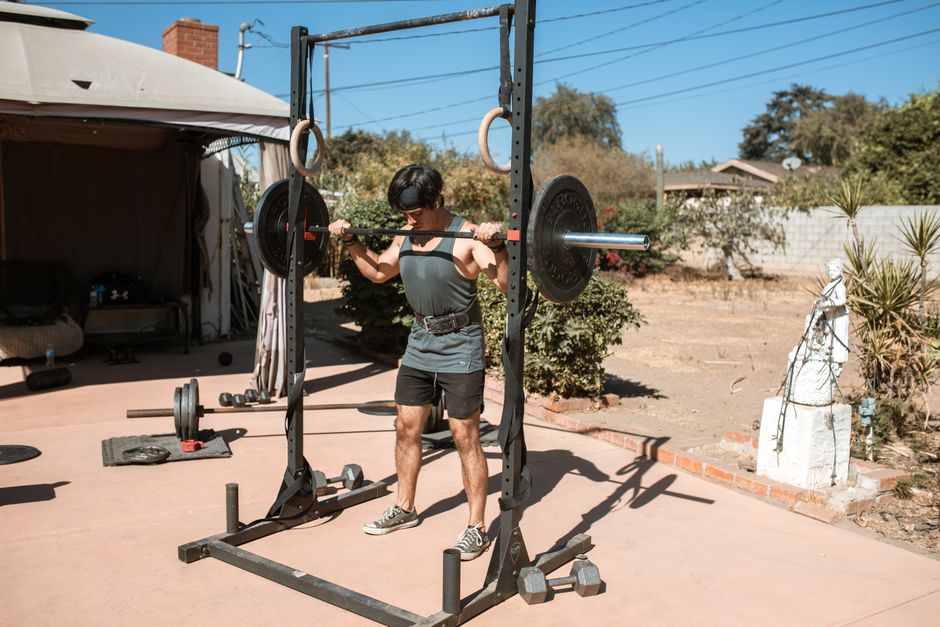
Maintaining a neutral spine throughout the movement is important for reducing stress on the lower back. Common early challenges include limited ankle mobility or tight hip flexors, which can restrict depth. Controlled practice with lighter loads, along with dedicated mobility work, can gradually improve range of motion. As technique becomes consistent, the lifter may progress to a barbell back squat, where the bar rests across the upper back. The squat pattern appears in many daily activities, making it a versatile and valuable exercise for building strength and stability in the lower body.
The Deadlift
The deadlift is a hip-hinge movement that emphasizes the posterior chain — the muscles along the back of the body, including the hamstrings, glutes, and erector spinae. It also involves the grip, forearms, and core. The conventional deadlift begins with the barbell on the floor, positioned over the midfoot. The lifter bends at the hips and knees to grasp the bar with both hands at roughly shoulder width. A flat back is maintained by engaging the lats and keeping the chest up. The lift is initiated by driving through the heels and extending the hips and knees simultaneously until the bar reaches the standing position.
Controlled lowering of the bar completes the repetition. For beginners, lighter loads allow the lifter to focus on the hip hinge pattern and bracing technique. A common observation is that the deadlift can feel unfamiliar because it requires coordination between the lower and upper body. Avoiding excessive rounding of the lower back and keeping the bar close to the body are typical focus points. Some lifters begin with a sumo stance or use a trap bar, which can reduce stress on the lower back. As familiarity improves, gradual increases in load can be introduced while maintaining form. The deadlift provides a practical way to develop total-body strength, particularly in the posterior chain.
The Bench Press
The bench press is a horizontal pushing movement that targets the chest, shoulders, and triceps. The lifter lies on a flat bench with feet planted on the floor for stability. The barbell is grasped with a grip slightly wider than shoulder width, and the bar is unracked over the shoulders. During the descent, the bar is lowered to the lower chest or sternum area while the elbows remain at approximately a 45-degree angle to the torso. The press phase involves driving the bar back up to the starting position, keeping the shoulders retracted against the bench.
For beginners, using a spotter or safety arms can provide security when learning the movement. Controlling the bar through a full range of motion — without bouncing off the chest — helps develop strength evenly across the involved muscles. A common emphasis is on maintaining a stable shoulder position throughout the lift. Variations such as dumbbell bench presses can reduce the need for a spotter and allow for a more natural wrist angle. The bench press is often used as a measure of upper-body pushing strength, but its primary value for a beginner lies in learning how to coordinate the shoulder, chest, and arm muscles under load.
The Overhead Press
The overhead press is a vertical pushing exercise that primarily works the shoulders, with assistance from the triceps and core. It can be performed standing or seated, with standing offering greater core and stability demands. The lifter positions the barbell at shoulder height with an overhand grip slightly wider than shoulder width. The bar is pressed directly overhead until the arms are fully extended, with the head moving slightly back to allow the bar to pass. The bar then returns to the starting position in a controlled manner.
Because the overhead press requires balance and shoulder mobility, beginners may start with a seated dumbbell press to build confidence and control. Maintaining a neutral spine and avoiding excessive arching of the lower back are important points of attention. The core remains engaged throughout to prevent leaning backward. This exercise highlights the importance of scapular stability and shoulder health. When performed consistently, the overhead press can contribute to improved upper-body strength and posture. As with other lifts, gradual progression in weight should follow from established technical proficiency.
The Bent-Over Row
The bent-over row is a horizontal pulling movement that targets the back muscles, including the latissimus dorsi, rhomboids, and trapezius, as well as the biceps and posterior chain. The lifter begins by hinging at the hips with a flat back, similar to the setup for a deadlift but with a greater forward lean. The barbell is grasped with an overhand or underhand grip, and the bar is pulled toward the lower ribcage. The elbows are driven back and slightly upward, and the scapulae are allowed to retract as the bar reaches the body.
For beginners, maintaining a stable torso position can be challenging, so starting with a moderate load and focusing on control is recommended. Some find it easier to perform the row with one arm using a dumbbell while the opposite hand and knee are braced on a bench, which also reduces lower back fatigue. The bent-over row provides a counterbalance to the pressing exercises, helping to build balanced upper-body strength. It also reinforces the hip hinge pattern introduced in the deadlift. Over time, the row can be progressed by increasing load or varying the grip width to target different areas of the back.
Developing familiarity with these five movement patterns can serve as a practical starting point for any beginner interested in strength training. Each exercise offers a specific stimulus that contributes to overall muscle coordination, joint stability, and strength adaptation. Consistent practice, combined with attention to form and gradual load progression, supports long-term improvement. Individual responses to training vary, and adjustments to exercise selection, volume, and intensity will depend on personal circumstances. These exercises represent one approach among many, and their value lies in their ability to teach fundamental movement skills that can be built upon over time.